Print Template Panorama Nature: A Practical Guide for Designers and Small Business Owners
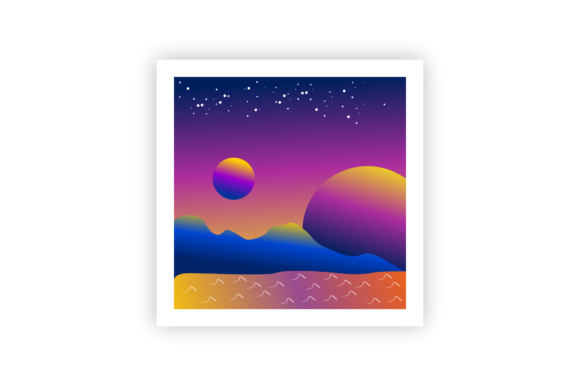
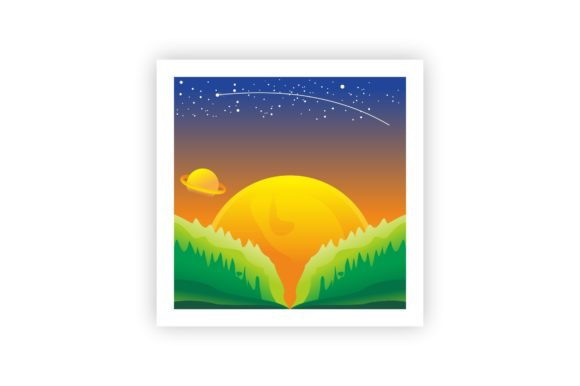
Print Template Panorama Nature refers to a curated set of digital design assets—typically landscape-oriented, nature-inspired visuals—that are optimized for both screen use and physical output. Unlike generic stock illustrations or one-off graphics, these templates are built with flexibility in mind: they arrive in multiple industry-standard formats (EPS, SVG, PNG, JPG) and support easy resizing, recoloring, and layout adaptation directly within common design software or printer settings. They’re not static images; they’re working tools intended for integration into real-world projects—from branded merchandise to marketing collateral.
What Sets Print Template Panorama Nature Apart
The defining trait of Print Template Panorama Nature is its dual-purpose architecture. Many nature-themed design resources fall into one of two categories: high-resolution photos meant for background use, or vector icons designed for UI or web elements. Print Template Panorama Nature occupies the middle ground—it delivers scalable, editable vector-based scenes (via EPS and SVG) alongside raster versions (PNG and JPG) that retain clarity at common print sizes. This hybrid format support means you’re not locked into one workflow: designers using Adobe Illustrator can manipulate layers and paths, while users of Canva or Cricut Design Space can rely on transparent PNGs for cut files or overlays.
Another practical distinction lies in intentional composition. These templates are framed in panoramic proportions—often 16:3 or wider—which makes them especially suitable for horizontal applications like banners, tote bags, wall decals, or the wide surface area of t-shirts laid flat. That’s not incidental. Standard square or portrait-oriented nature graphics often require heavy cropping or distortion to fit those spaces, compromising visual balance. Print Template Panorama Nature avoids that by starting with aspect ratios aligned to common production constraints.
How It Compares With Other Nature-Themed Design Resources
When evaluating alternatives, it helps to group options by primary use case and technical capability:
- Stock photography libraries offer vast nature imagery but rarely include editable vectors or pre-optimized print dimensions. You’ll often need to license individual images, manage color profiles manually, and handle scaling decisions without built-in guidance.
- SVG icon sets provide clean, scalable elements—but usually as isolated objects (a pine tree, a mountain silhouette), not cohesive scenes. Assembling a balanced panorama from separate icons demands significant design time and aesthetic judgment.
- Custom illustration commissions deliver uniqueness and brand alignment, yet involve longer timelines, higher costs, and less flexibility for iterative changes post-delivery.
- Free graphic repositories may supply similar-looking files, but often lack consistent color models, embedded fonts, or commercial-use licensing clarity—especially important when printing on products for resale.
Print Template Panorama Nature sits between off-the-shelf convenience and tailored functionality. It doesn’t replace custom work for highly specific branding needs, nor does it compete with broad stock libraries for sheer volume. Instead, it fills a niche where speed, adaptability, and print-readiness matter more than absolute originality.
Strengths and Real-World Fit
The core strength of Print Template Panorama Nature is operational efficiency. Because files come pre-formatted for both digital and print workflows, users avoid common bottlenecks: converting RGB to CMYK manually, adjusting DPI for garment printing, or rebuilding layered compositions from scratch. For example, a small business owner launching eco-friendly apparel could apply a single template across multiple SKUs—using the SVG version to adjust leaf colors for a green hoodie, then exporting a JPG at 300 DPI for a promotional email banner—all without needing external help.
It also supports consistency across touchpoints. A café sourcing reusable key hangers, napkin prints, and window decals can maintain a unified nature motif using the same base template, varying only size and accent color per item. That kind of cohesion strengthens brand recognition without requiring a full visual identity system.
Limitations and When to Look Elsewhere
While versatile, Print Template Panorama Nature isn’t universally appropriate. Its nature-centric theme limits applicability for industries where tone or subject matter must align closely with technology, finance, healthcare, or urban aesthetics. Similarly, if your project requires photorealistic detail—like showing specific plant species for educational material—the stylized, illustrative approach may lack necessary fidelity.
There’s also a functional boundary around customization depth. While color and scale adjustments are straightforward, altering core composition—such as removing a mountain range or repositioning a river path—requires vector editing proficiency. Users unfamiliar with path manipulation in Illustrator or Inkscape may find those tasks time-consuming, even if technically possible.
If your goal is mass personalization—for instance, dynamically inserting customer names or locations into each print—you’ll likely need additional scripting or platform integration beyond what these static files provide. Print Template Panorama Nature offers the visual foundation, not the automation layer.
Practical Decision Factors
Consider Print Template Panorama Nature when:
- You need nature-themed visuals that work equally well on a 2” key hanger and a 24” wide poster.
- Your team uses mixed software—some members prefer vector editors, others rely on simpler tools—and you want one source file that serves both.
- You’re producing physical items in-house or through short-run print services and want predictable color and resolution behavior without trial-and-error testing.
- You value clear licensing terms for commercial use and don’t want to navigate complex attribution requirements or subscription tiers.
Look toward other solutions if:
- You require bespoke illustration style matching an existing brand palette down to Pantone references.
- Your output includes large-format signage where ultra-high-resolution photo detail is essential.
- You’re building a dynamic web application where graphics must respond to user input in real time.
- You need multi-language text integration baked into the template (e.g., bilingual trail signage).
Understanding the Digital-Only Delivery Model
It’s important to clarify what “digital download only” means in practice. You receive no physical item—no USB drive, no printed proof, no mailed CD. Instead, you get immediate access to compressed archive files containing all supported formats. This model prioritizes speed and global accessibility: there’s no shipping delay, customs paperwork, or inventory tracking. But it also places responsibility on the user to verify compatibility with their tools and printers beforehand.
For most modern setups—whether using Epson or Canon inkjet printers, DTG t-shirt machines, or local print shops—this poses no barrier. File formats like EPS and SVG are widely supported, and PNG/JPG exports meet standard print service requirements. Still, if you're new to preparing files for physical output, reviewing your printer’s documentation for recommended DPI, bleed settings, and color space (CMYK vs. RGB) before downloading remains a prudent step.
Final Considerations for Informed Selection
No single design resource fits every scenario. Print Template Panorama Nature excels where balance matters: between creative control and time savings, between visual appeal and technical reliability, between affordability and professional-grade output. It’s not about choosing the “best” nature graphic—it’s about selecting the right tool for how, where, and why you plan to use it.
As with any digital asset, reviewing previews carefully—including zoomed details, layer structure (if visible), and sample color variations—helps confirm alignment with your goals. And because usage context varies so widely—whether for personal craft projects, freelance client work, or small-batch product lines—the most useful evaluation comes not from feature lists alone, but from asking: Does this simplify my next step, or add complexity?